


Inside a CEPC Bhadohi Exhibition: How Authentic Handmade Rugs Are Actually Constructed
This footage comes straight from the 50th India Carpet Expo, held 4-6 October 2026 at the Carpet Expo Mart in Bhadohi and organized by the Carpet Export Promotion Council (CEPC) — the heart of India's hand-knotted carpet belt, and the region behind nearly every rug in that "50 glimpses" reel. Watching pieces move through the exhibition floor is a good excuse to actually explain how these rugs are built, because the construction method is exactly what separates a genuine handmade carpet from something that only looks like one.
Why the India Carpet Expo Happens in Bhadohi
Bhadohi and the surrounding weaving belt in Uttar Pradesh has been producing hand-knotted carpets for generations, and it remains one of the largest carpet-weaving clusters in the world. CEPC hosts the India Carpet Expo here precisely because this is where the weavers, the looms, and the finishing units all sit within the same region — buyers can walk from a raw wool bale to a finished, washed carpet without leaving the district. The 2026 edition marks the expo's 50th installment and is expected to bring in exporters and buyers from more than fifty countries, which is a fair signal of how central this region still is to the global handmade rug trade.
Hand-Knotting: The Slowest, Most Durable Method
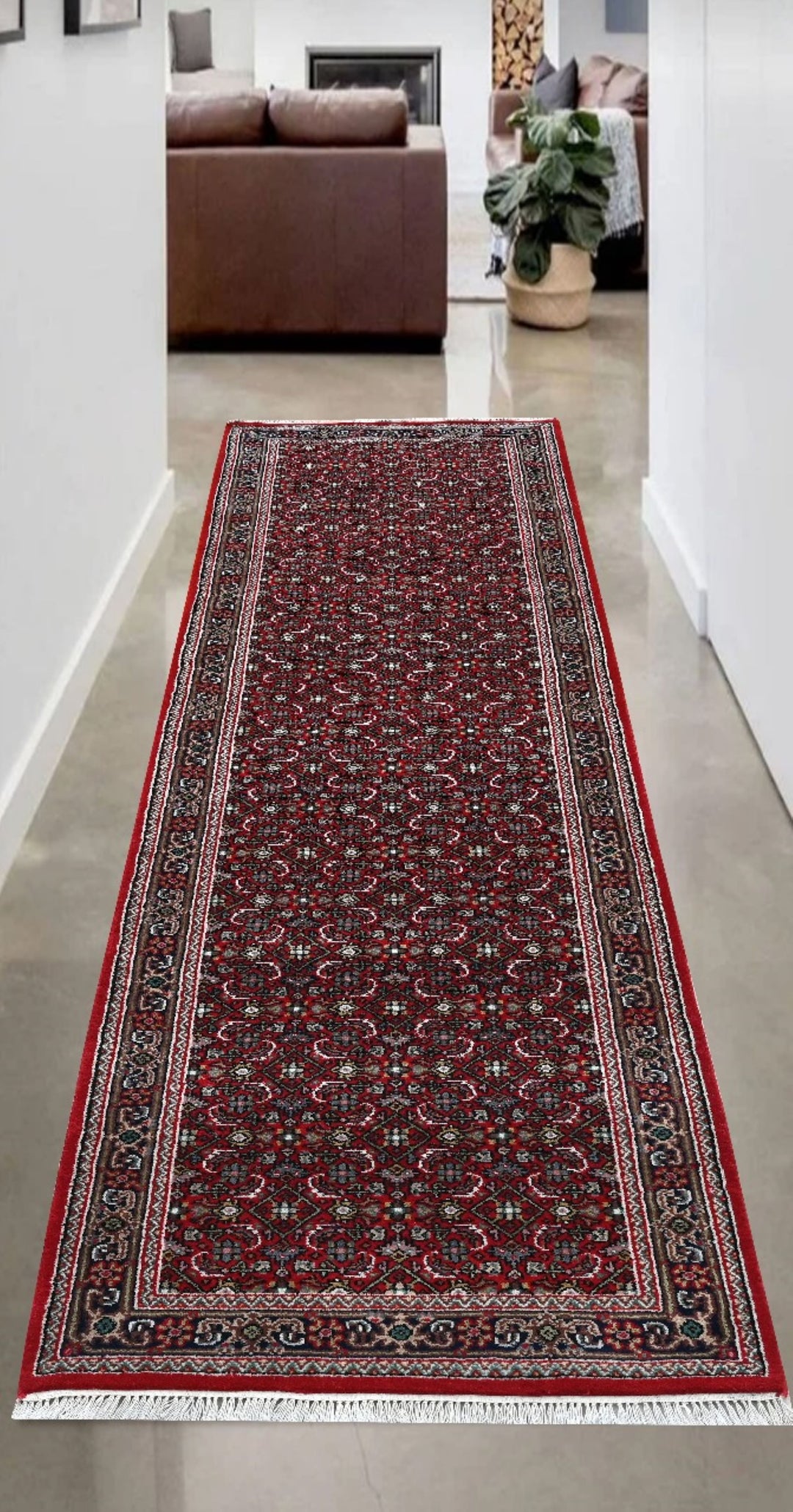
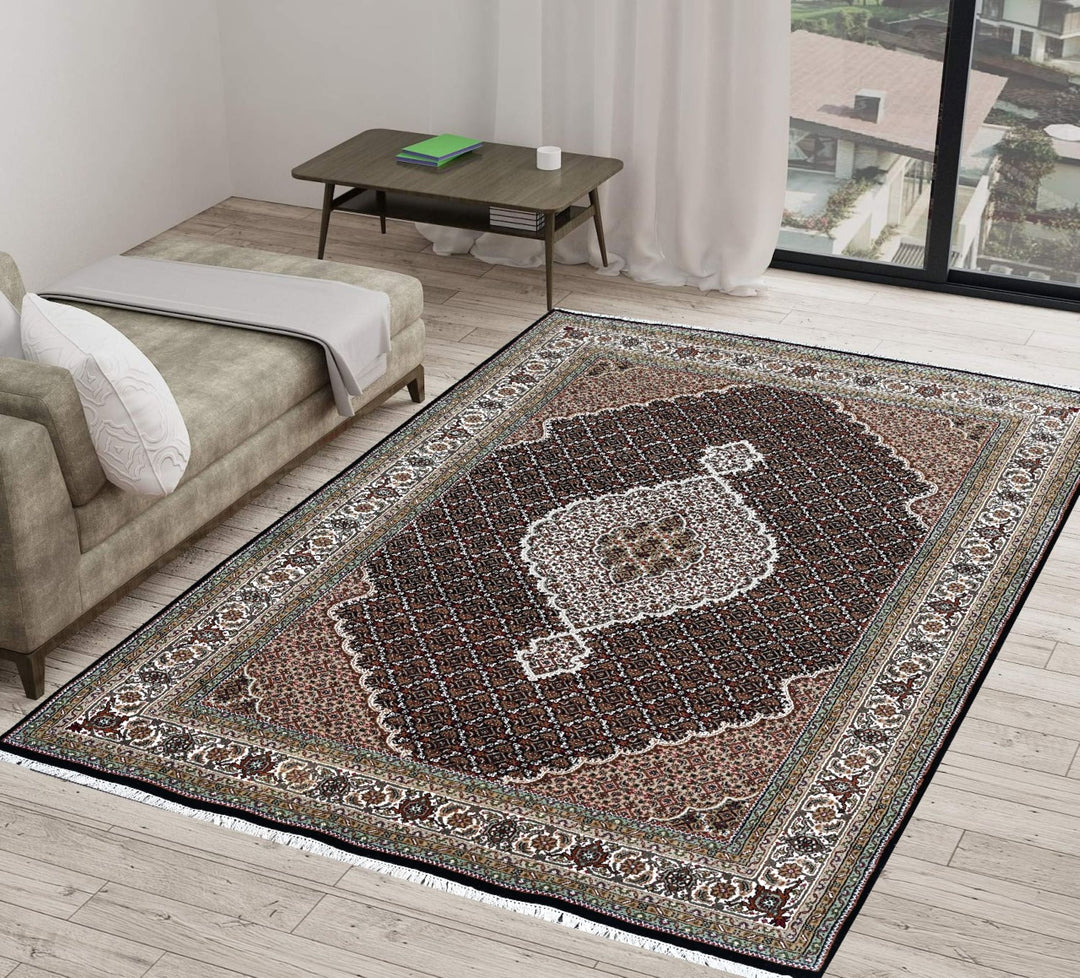
The most labor-intensive construction method on display is hand-knotting, where a weaver ties individual knots — usually a Persian (Senneh) or Turkish (Ghiordes) knot — row by row onto a warp of cotton or silk threads stretched on a vertical loom. Knot density is what determines both the fineness of the design and the durability of the rug; a piece with a high knot count per square inch can render intricate floral or medallion patterns and will typically outlast a machine-made rug by decades. A single medium-sized hand-knotted carpet can take a skilled weaver several weeks to months to complete, which is the main reason these pieces cost more than a printed or power-loomed equivalent — you're paying for hours of human hands, not machine time.
Hand-Tufting: How the Fish and Floral Pieces Are Made
The more graphic, pictorial designs — like the school of fish or the cherry blossom branches from the reel — are built differently. In hand-tufting, a weaver uses a tufting gun to punch yarn through a stretched fabric backing, following a pre-drawn outline of the design. A layer of latex adhesive is applied to the back to lock the yarn in place, then a second fabric layer is glued on for structure. The pile is then hand-sheared with scissors to sharpen the pattern edges and even out the surface. It's faster than hand-knotting and better suited to bold, sculptural, or asymmetric motifs, but it's still entirely hand-guided work — nothing about a hand-tufted rug is machine-loomed.
Flat-Weaving: Kilims and Dhurries
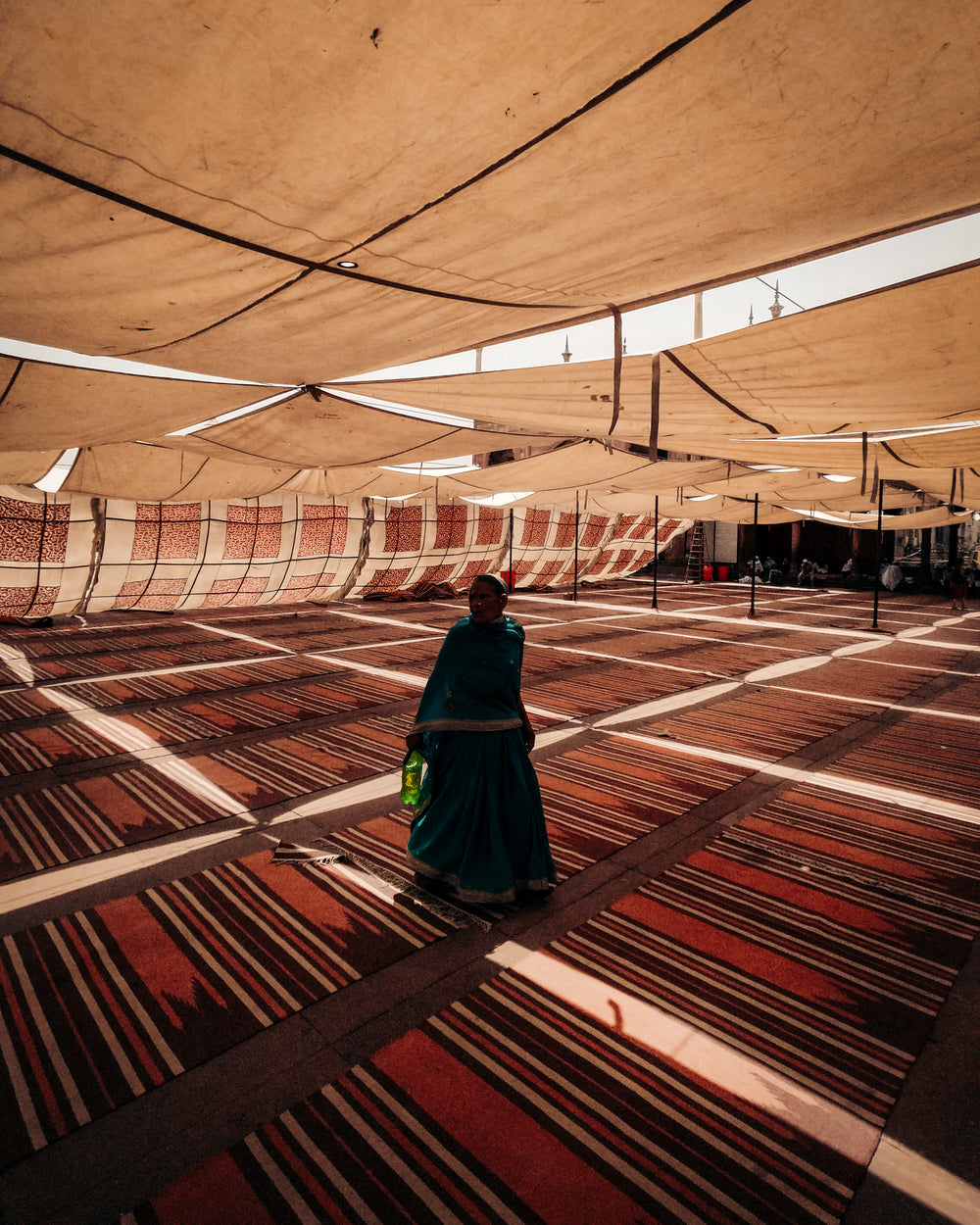
The geometric diamond-pattern pieces are flat-woven rather than knotted or tufted. Here, the weft yarn is passed over and under the warp threads in a plain weave, with color changes made by literally switching yarn colors mid-row rather than knotting or tufting on top of a base. There's no pile at all — both sides of the rug look nearly identical, which is why these pieces are reversible and tend to be lighter and more packable than knotted or tufted rugs.
The Wash: The Step That Confirms Authenticity
Every one of these techniques ends the same way — a wash. Freshly made rugs go through a controlled washing process that removes excess dye, straightens the pile, and brings out the natural sheen of wool or silk. This is also, practically speaking, one of the easiest ways to spot a genuinely handmade piece versus a machine-made import: the wash softens and slightly ages the surface in a way synthetic, factory-finished rugs don't replicate.
What This Means When You're Buying
None of this is trivia — it's a buying guide. If a rug is described as "hand-knotted," it should show knot density and a slightly irregular, organic pattern on close inspection. If it's "hand-tufted," check the backing for the tell-tale canvas-and-latex construction (a legitimate seller will disclose this; it's not a lesser product, just a different one). And if you're buying flat-weave, both faces of the rug should be identical. Understanding the construction method is the single best way to know you're getting what you're paying for, whether that's an heirloom-grade knotted piece or a more casual tufted accent rug.
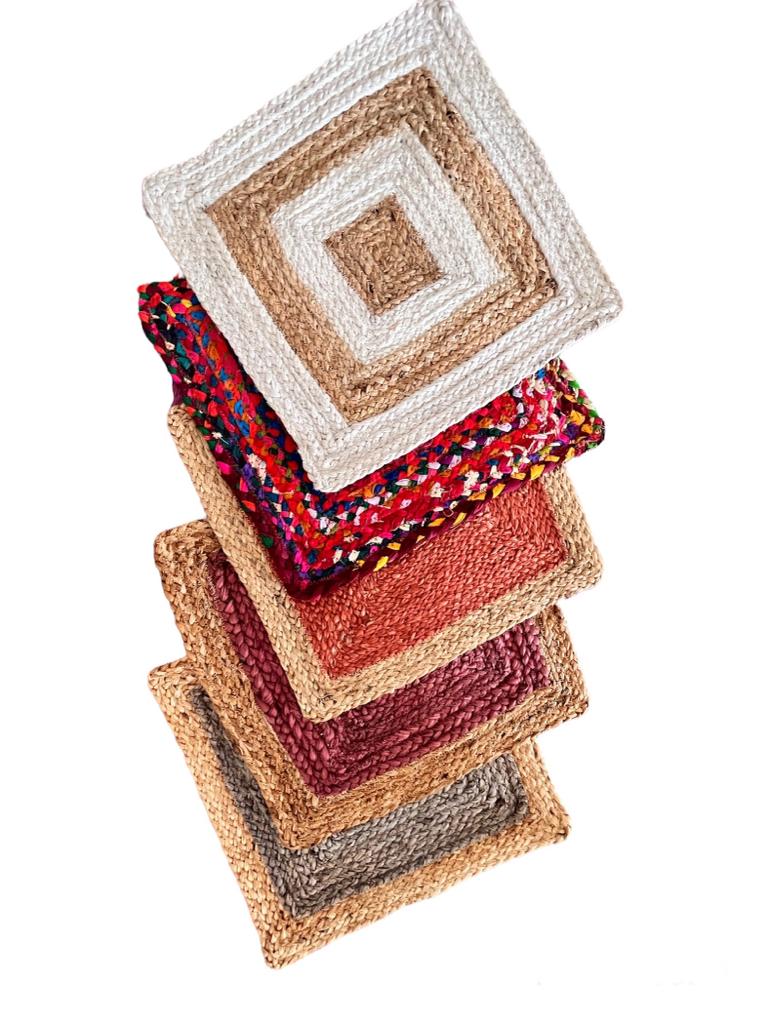
Every rug we carry at Kalinmart comes out of this same weaving belt and goes through one of the three methods above. If you're deciding between a wool piece and a more casual natural fiber for a specific room, our Wool vs. Jute Rugs guide can help you narrow it down.