



How to Choose the Right Area Rug Size for Every Room
One of the most common mistakes in decorating a room is choosing a rug that's too small. A rug that "floats" in the middle of a room without touching any furniture can make even a well-designed space feel disconnected and unfinished. Here's a simple, practical guide to getting rug sizing right — room by room.
Living Room
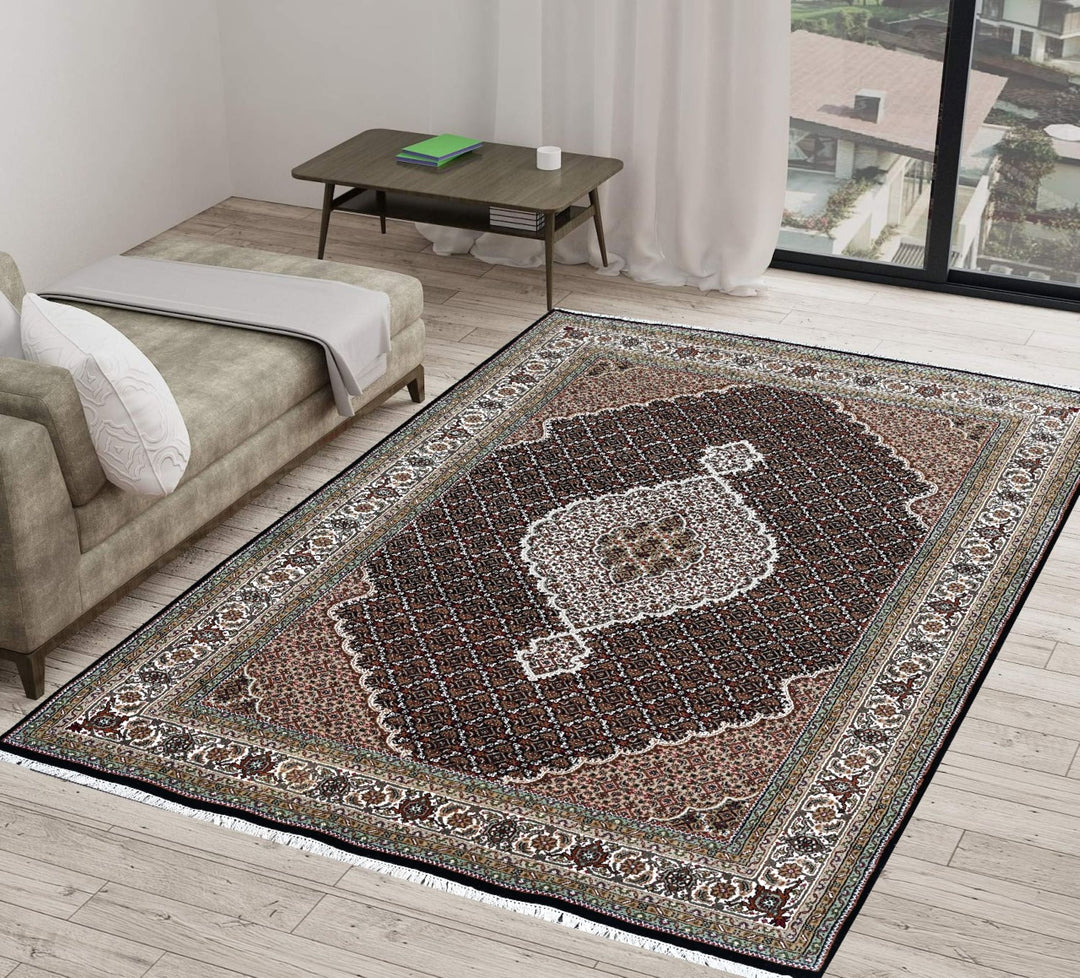
For most living rooms, the front legs of your sofa and chairs should rest on the rug — this visually anchors the seating area together. A 5' x 8' rug works well for smaller living rooms, while 8' x 10' is a better fit for larger rooms with a full sectional or multiple seating pieces. If your space allows, all four legs of your furniture resting on the rug creates an even more polished, cohesive look.
Bedroom
In a bedroom, the rug should extend at least 18-24 inches beyond the sides and foot of the bed, so your feet land on soft rug rather than cold floor when you get up. A 6' x 9' rug typically works well under a queen bed, while an 8' x 10' rug gives more room to breathe around a king-size bed.
Entryway & Foyer
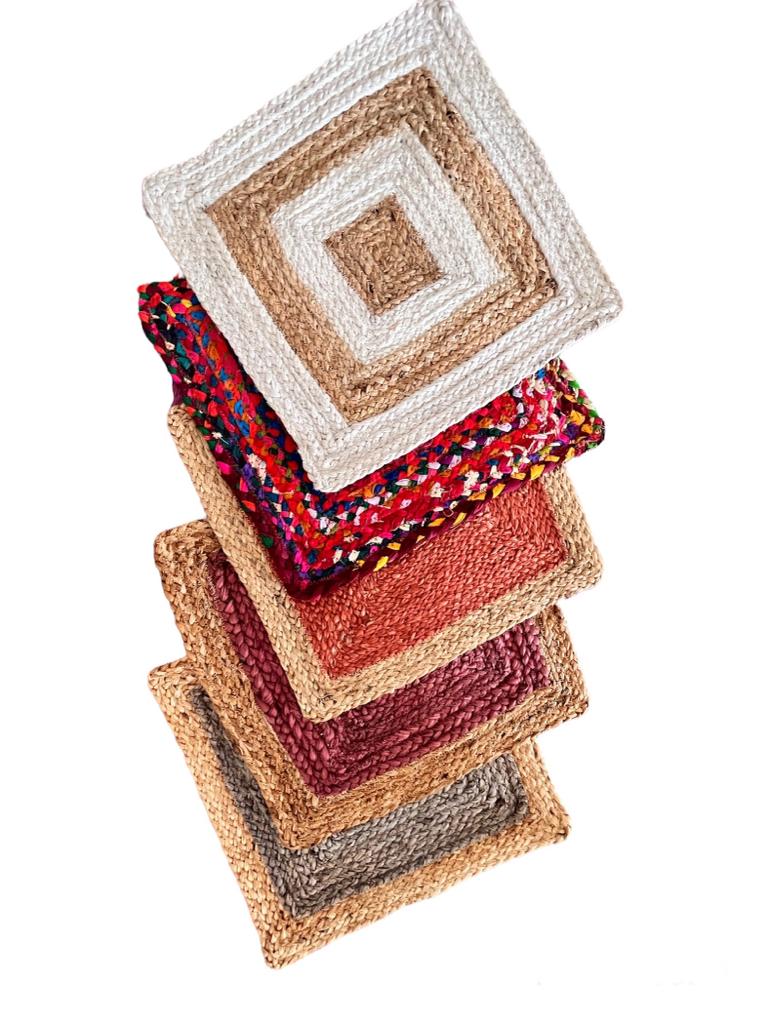
Entryways call for a different approach — the rug is often the first thing guests notice, and it needs to handle real foot traffic. Round rugs between 3-5 feet in diameter work beautifully in foyers, while runners are ideal for narrow hallways leading in from the door. Look for durable, low-pile materials like jute or a jute-cotton blend, since these areas see more wear than a formal living room. Not sure whether jute or wool suits your entryway better? Our Wool vs. Jute Rugs guide compares the two by feel, durability, and room fit.
Hallways
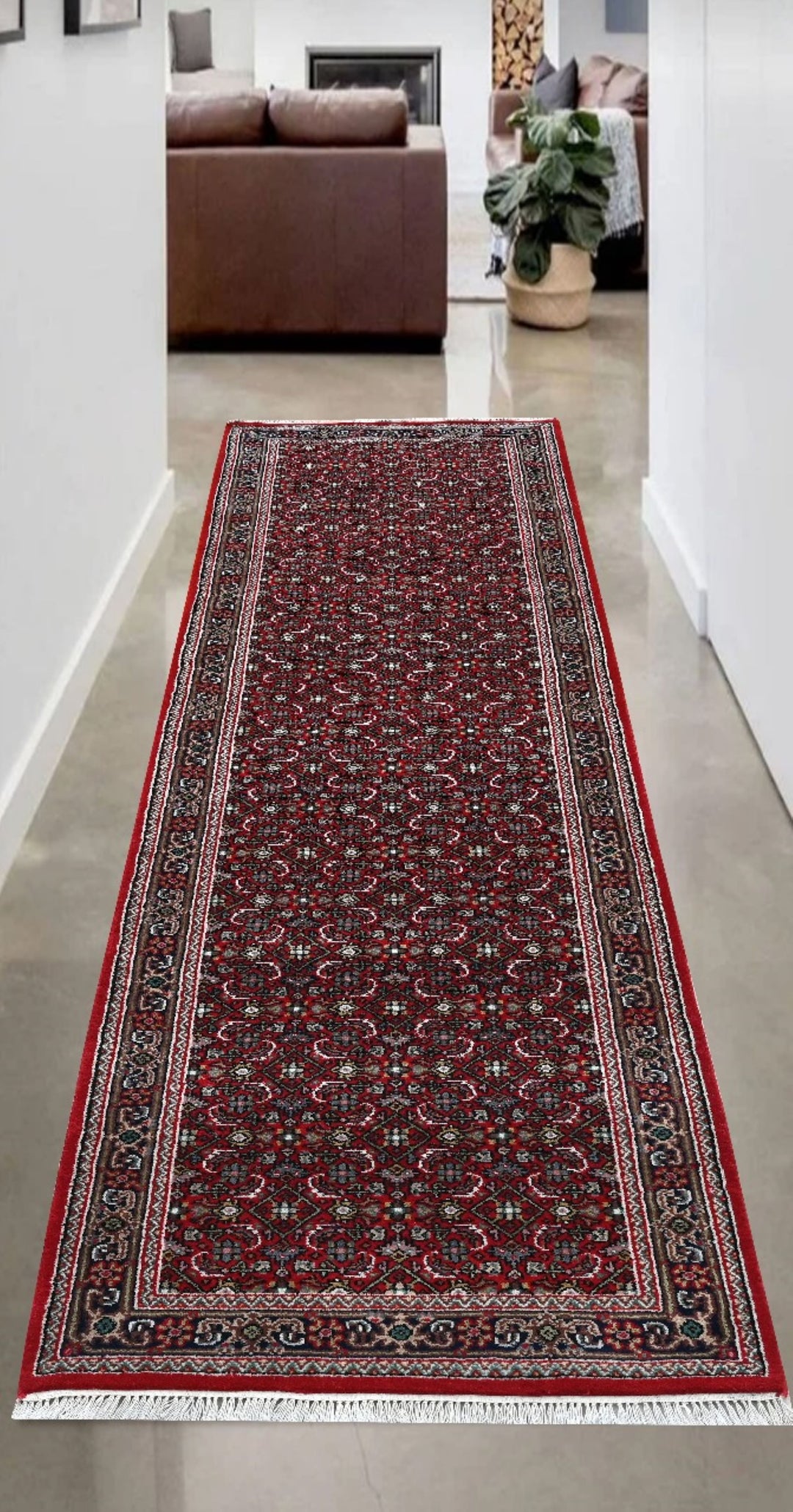
For hallways, a runner rug is almost always the right choice. Measure your hallway's length and aim for a runner that leaves 4-6 inches of flooring visible on each side and at both ends — this keeps the space feeling proportional rather than cramped. Common runner sizes range from 2'6" wide by 6', 8', or 10' long, depending on your hallway's length.
Dining Room
Your dining rug needs to be large enough that all four chair legs stay on the rug even when pulled out from the table — this typically means adding at least 24 inches of rug beyond each edge of the table on all sides. A round jute or cotton rug can also work beautifully under a round dining table, adding texture without competing with the table itself.
A Quick Rule of Thumb
When in doubt, size up rather than down. A slightly larger rug almost always looks more intentional than one that's too small, and it makes the whole room feel more grounded and complete.