


How to Choose the Right Hallway Runner Rug: Size, Width, Material & Placement

A hallway runner can completely change the feel of a narrow space.
It can make a long hallway feel finished, add warmth to an entryway, protect the floor in a busy walkway, and bring some personality to an otherwise overlooked part of the home.
But runners are also surprisingly easy to get wrong.
Too short, and the rug can look like it was dropped into the hallway as an afterthought. Too wide, and the space can feel cramped. Too thick, and doors may not open properly. And the wrong material can become frustrating in an area that gets walked through all day.
So before you choose a pattern or color, start with the basics:
How wide is your hallway?
How long should the runner be?
How much floor should show around it?
Which material makes sense for the space?
This guide will walk you through all four.
What Is a Hallway Runner?
A runner is a long, narrow rug designed for spaces where a traditional rectangular area rug would be too wide.
They're commonly used in:
- Hallways
- Entryways
- Kitchens
- Narrow bedrooms
- Walkways between rooms
- Long passages
- Alongside beds
Most hallway runners are around 2 to 3 feet wide, with lengths commonly ranging from about 6 to 14 feet. The exact size you need depends on the dimensions of your hallway.
KalinMart carries runners in both natural-fiber and wool constructions, including 2'6" × 6', 2'6" × 8', and 2'6" × 10' options.
First: Measure Your Hallway
Before looking at rug designs, get three measurements:
1. Hallway width
2. Hallway length
3. Door clearance
That third measurement is easy to forget.
Open every door that connects to the hallway and make sure the runner won't interfere with the door swing.
If you have a particularly narrow hallway, measure the actual walking space rather than assuming the full wall-to-wall width is available.
What Width Should a Hallway Runner Be?
For most hallways, a runner should leave some visible flooring along both sides.
A common starting point is to leave approximately 3–6 inches of floor on each side, although the exact amount depends on the proportions of the hallway and the runner. Current runner-sizing guidance commonly places standard runner widths around 2–3 feet.
Here's a useful starting point:
| Hallway Width | Runner Width to Consider |
|---|---|
| 30 inches | About 22–24 inches |
| 36 inches | About 24–30 inches |
| 42 inches | About 30–34 inches |
| 48 inches | About 30–36 inches |
| 54+ inches | Consider a wider runner or small area rug |
These aren't hard rules.
Your goal is simply to create a visible border of flooring around the runner so the rug looks intentionally placed rather than squeezed into the hallway.
A simple rule:
Hallway width − runner width = your total side clearance.
Then divide that clearance between the two sides.
For example:
A 36-inch-wide hallway with a 30-inch runner leaves 6 inches total, or about 3 inches on each side.
A 42-inch hallway with a 30-inch runner leaves 12 inches total, or about 6 inches per side.
How Long Should a Hallway Runner Be?
Length is just as important as width.
You generally don't want the runner pressed against both ends of the hallway.
Leaving some visible floor at the beginning and end gives the space room to breathe.
For many hallways, 6–12 inches of floor at each end is a useful starting point. Other sizing guides recommend roughly 6–9 inches at each end.
So if your hallway is:
8 feet long
A 6-foot runner may work well.
10 feet long
An 8-foot runner is a natural starting point.
12 feet long
A 10-foot runner may be a good choice.
But don't treat those numbers as a formula.
Measure your hallway first.
Common Hallway Runner Sizes
These are some of the most useful sizes to look for:
| Runner Size | Where It Can Work |
|---|---|
| 2' × 6' | Short hallways, entryways, small passageways |
| 2'6" × 6' | Short-to-medium hallways |
| 2'6" × 8' | Many standard hallways |
| 2'6" × 10' | Longer hallways |
| 3' × 8' | Wider hallways |
| 3' × 10' | Wider, longer hallways |
| 2'6" × 12'+ | Long hallways, depending on layout |
KalinMart currently carries several 2'6"-wide runners in 6-, 8-, and 10-foot lengths, which makes it easier to match the rug to the length of your hallway rather than trying to make one size work everywhere.
What If Your Hallway Is Very Long?
This is where people often make the mistake of thinking:
"I need one rug that covers the entire hallway."
Not necessarily.
A runner doesn't have to stretch from one end of the hallway to the other.
A little floor showing at either end can actually make the space look more balanced.
If the hallway is exceptionally long, you can also consider two runners, provided they work visually together and the layout allows enough space between them.
The goal is to create a continuous visual path without making the floor look completely covered.
Should a Runner Touch the Walls?
Usually, no.
A runner should generally be narrower than the hallway.
The visible flooring along the sides acts almost like a frame around the rug.
This is especially important in narrow hallways.
If the rug reaches all the way from one wall to the other, it starts to look more like wall-to-wall carpeting than a runner.
And if the runner is only a few inches narrower than the hallway, the space can feel crowded.
What About Doorways and Doors?
This is one of the most important practical checks.
Before buying a runner, open every nearby door.
Check:
- Bedroom doors
- Closet doors
- Bathroom doors
- Front doors
- Pantry doors
A thick rug can interfere with a door even when the rug's width looks perfect.
This is one reason lower-profile runners are often a practical choice for hallways.
KalinMart's beige-and-white jute/sisal runner, for example, has a 0.5-inch pile and comes in 2'6" × 6', 8', and 10' lengths.
Should You Put a Runner in an Entryway?
It depends on the shape of the entryway.
If your front door opens directly into a narrow hallway, a runner can be an excellent choice.
If you have a wider foyer, a round or rectangular area rug may make more sense.
KalinMart currently carries both round natural-fiber rugs and narrow runners, so the shape of your entryway can determine which direction makes more sense.
Narrow entryway
Try a runner.
Square or open foyer
Consider a round or rectangular area rug.
Long entrance hallway
A runner is usually the natural choice.
What Material Is Best for a Hallway Runner?
Once you've figured out the size, think about the material.
This is where there isn't one universal winner.
Wool Runners

Wool is a strong choice when you want:
- Softness
- Comfort
- Rich color
- Detailed patterns
- A more refined appearance
- A rug that feels substantial
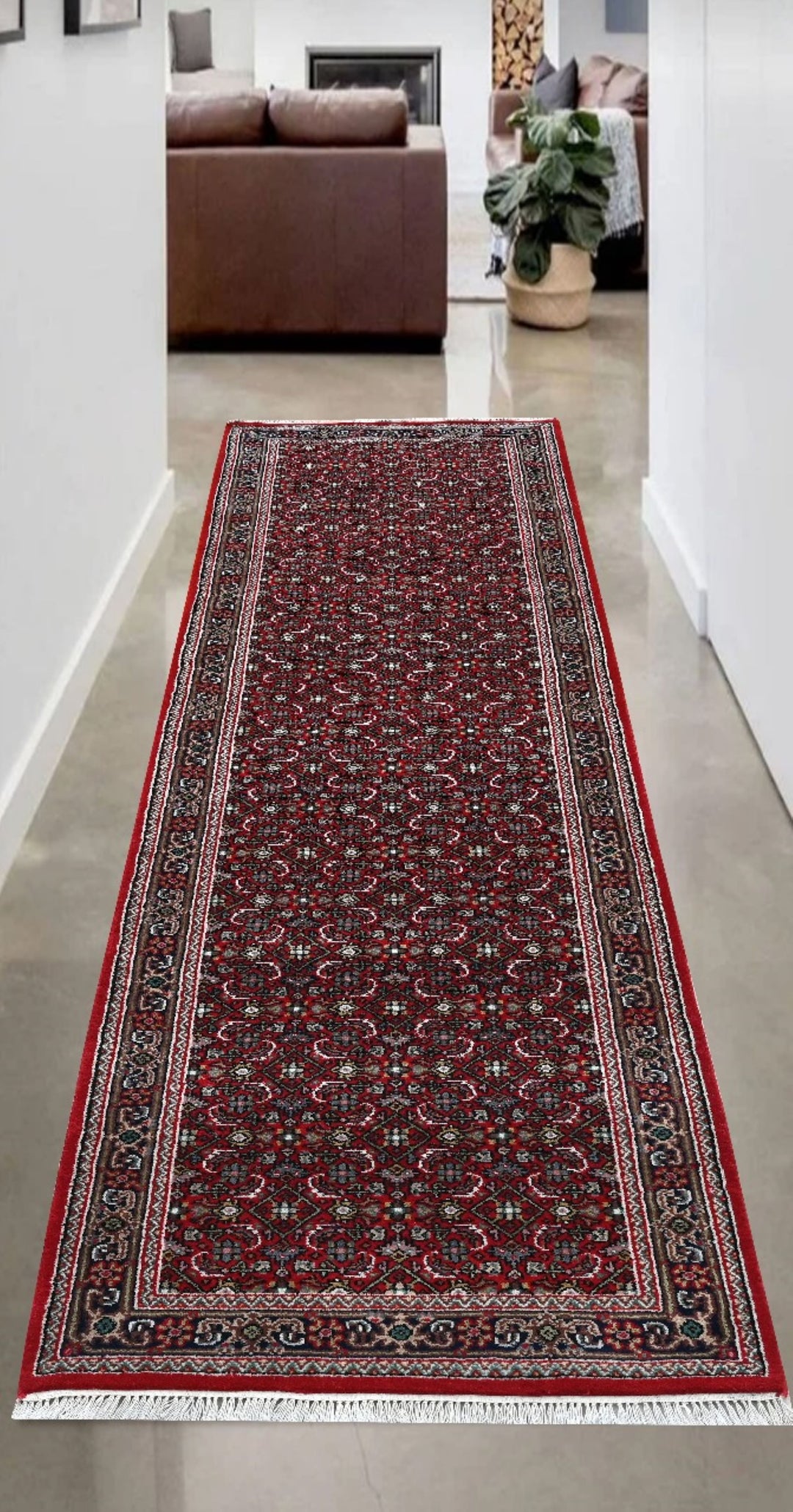
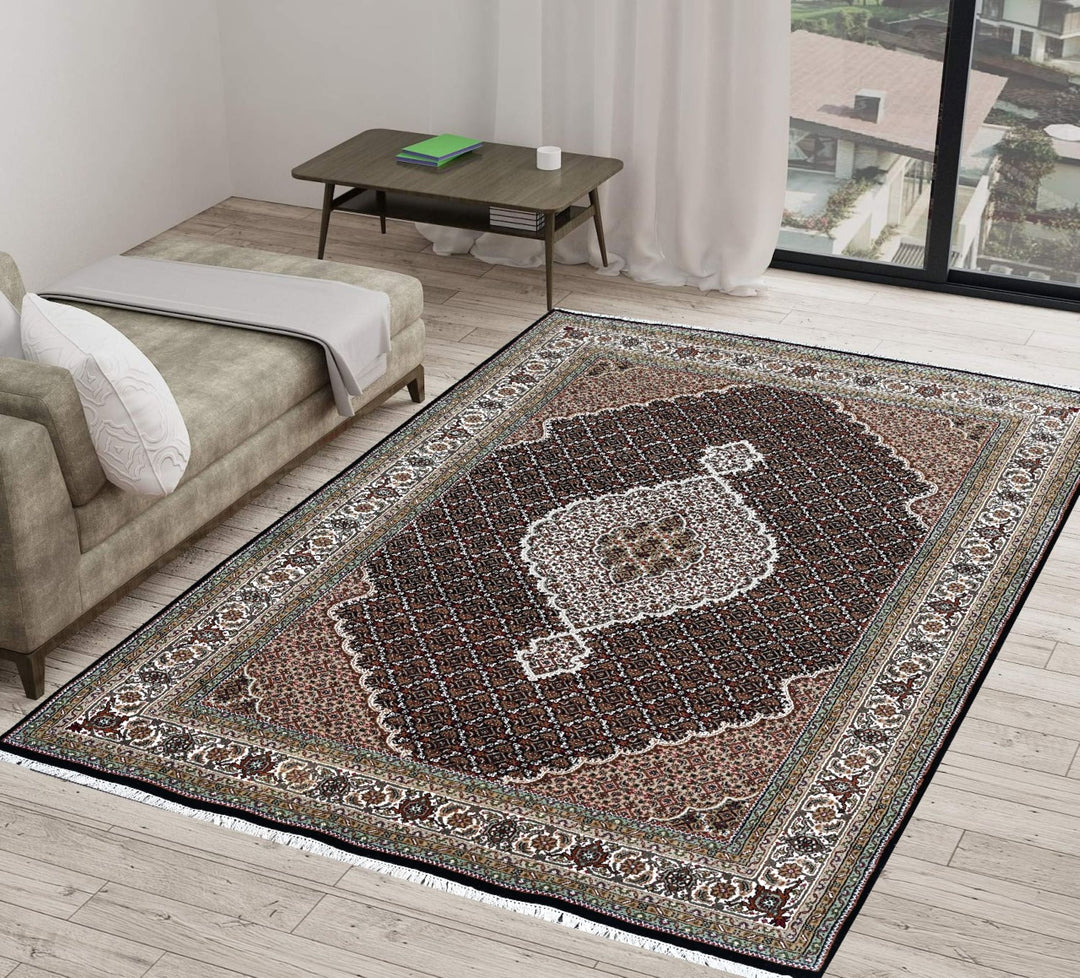
KalinMart carries hand-knotted wool runners in designs including Litchi and Nain-Kashan.
A patterned wool runner can also make a hallway feel like part of the home's overall design instead of simply being a functional walkway.
Explore KalinMart's handmade wool rugs and runners →
Jute and Natural-Fiber Runners

Jute has a very different character.
It's a good option when you want:
- Natural texture
- Neutral colors
- A relaxed look
- Rustic or boho character
- Hand-braided or woven texture
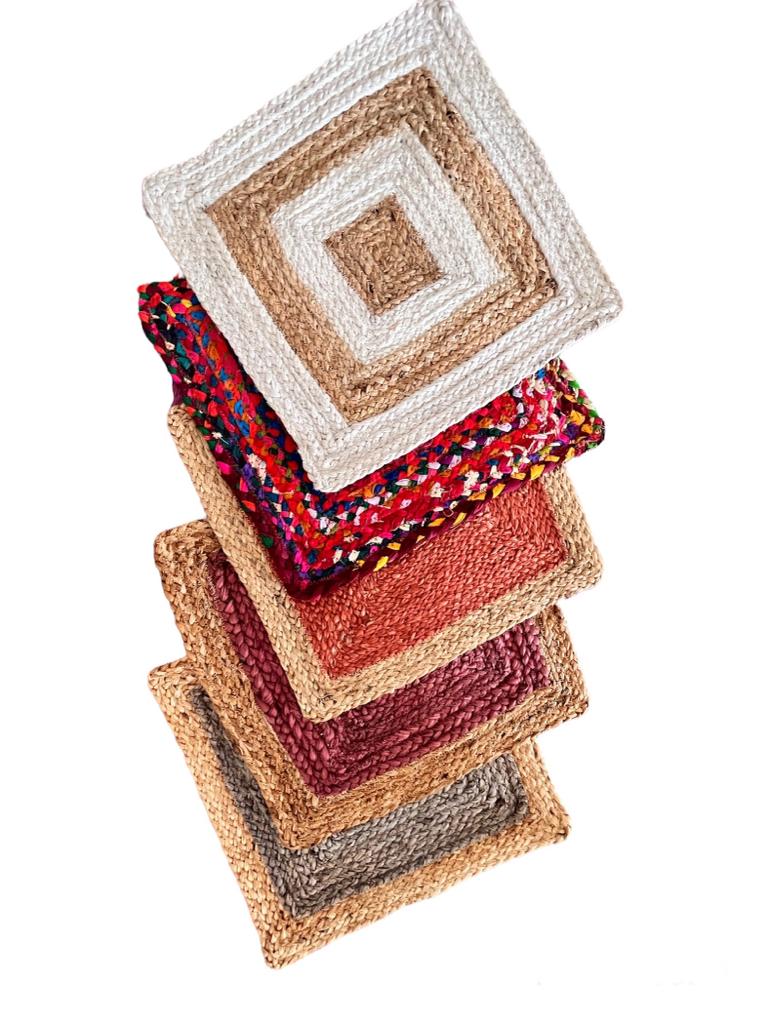
KalinMart's jute collection includes hand-braided natural-fiber rugs and runners, with several options specifically sized for hallways and other narrow spaces.
Explore KalinMart's Jute Area Rugs & Runners →
Wool vs. Jute for a Hallway
If you're deciding between the two, think about the character you want.
Choose wool if:
You want softness, pattern, color, and a more traditional or refined appearance.
Choose jute if:
You want natural texture, neutral tones, and a more relaxed look.
If you're still deciding between the materials, our guide Wool vs. Jute Rugs: Which Is Better for Your Home? can help you compare softness, durability, appearance, maintenance, and where each material works best.
What Kind of Runner Works Best in a Busy Hallway?
Think about construction and pile height, not just fiber.
A busy hallway benefits from a runner that is practical to walk over and doesn't create unnecessary obstacles.
Consider:
- Lower pile
- Secure placement
- A suitable rug pad
- A color/pattern that won't show every bit of everyday dirt
- Construction appropriate for the level of traffic
And always check the manufacturer's care recommendations.
Don't Forget a Rug Pad
A runner should stay where you put it.
On smooth floors, a properly sized rug pad can help reduce movement and make the runner more comfortable underfoot.
It can also help prevent the rug from sliding when someone walks across it.
Choose a pad appropriate for both the rug and your flooring.
And make sure the pad doesn't extend beyond the edges of the runner.
Hallway Runner Placement: A Simple Formula
Here's an easy way to approach the whole process:
Step 1
Measure the hallway width.
Step 2
Subtract roughly 6–12 inches from the hallway width.
Step 3
That gives you a starting range for runner width.
Step 4
Measure the hallway length.
Step 5
Leave approximately 6–12 inches of visible floor at each end.
Step 6
Check every door swing.
Step 7
Choose the material based on how the hallway is used.
Step 8
Add an appropriate rug pad.
Then step back and look at the entire hallway.
If the runner feels visually balanced and leaves a clean border of floor around it, you're probably on the right track.
What Size Runner Do I Need?
Here's the quick version:
For a 30-inch hallway: Look around the 22–24-inch runner range.
For a 36-inch hallway: Around 24–30 inches.
For a 42-inch hallway: Around 30–34 inches.
For a 48-inch hallway: Around 30–36 inches.
Then choose the length based on the hallway rather than automatically buying the longest runner available.
KalinMart's 2'6" width is particularly useful because it falls within the common runner-width range and is available in multiple lengths.
Common Hallway Runner Mistakes
Buying the wrong width
A runner that's too wide can make a hallway feel cramped.
Buying one that's too short
A very short runner can look disconnected from the rest of the hallway.
Forgetting door clearance
Always check the door swing before ordering.
Covering the entire floor
A visible border around the runner usually creates a more intentional look.
Choosing style before size
That beautiful rug won't look right if the proportions don't work.
Ignoring the material
A hallway gets different treatment from a bedroom. Think about traffic and maintenance before choosing.
Skipping the rug pad
A moving runner isn't just annoying; it can also become a safety issue.
How to Make a Hallway Runner Look More Intentional
A runner doesn't have to match everything in the hallway.
Instead, look for one or two connections.
For example:
- Pick up a color from nearby artwork.
- Repeat a wood tone.
- Coordinate with a console table.
- Use a natural jute runner with wood and woven furniture.
- Use a patterned wool runner to bring color into an otherwise neutral hallway.
The runner can be the quiet background or the focal point.
Both approaches can work.
Which Runner Should You Choose?
If your priority is softness and a more finished, decorative look, consider a handmade wool runner.
If you want natural texture and a relaxed feel, consider jute or another natural-fiber runner.
If you're working with a narrow hallway, start with the dimensions before looking at the design.
Measure first. Shop second.
That's the simplest way to avoid buying a runner that's too wide, too short, or difficult to live with.
Explore Handmade Hallway Runners at KalinMart
KalinMart offers handmade runners in both wool and natural fibers, including hand-knotted wool designs and jute, cotton, sisal, and recycled-denim styles. Current runner sizes include options around 2'6" × 6', 8', and 10'.
Shop Handmade Wool Rugs & Runners →
Shop Jute Area Rugs & Runners →
If you're still deciding between wool and jute, read Wool vs. Jute Rugs: Which Is Better for Your Home? before choosing your material.
And for broader room-by-room sizing advice, see How to Choose the Right Area Rug Size for Every Room.
Final Thought
A hallway runner should do more than fill an empty strip of floor.
The right runner should make the hallway feel connected to the rest of the home, provide a comfortable walking surface, and fit the proportions of the space.
Start with the measurements.
Then think about material.
Then choose the design.
When the size is right, even a simple runner can make a hallway feel completely different.