


How to Clean a Jute Rug Without Damaging the Natural Fiber
Jute rugs bring warm color, visible texture, and an easy, natural look to living rooms, bedrooms, dining areas, hallways, and entryways. Their beauty comes from plant-based fibers, and those fibers need a different care routine than a synthetic, machine-washable rug.
The most important rule is simple: clean a jute rug gently and use as little moisture as possible. Regular vacuuming, quick spill response, careful blotting, and complete drying will do more for the rug than an aggressive deep-cleaning method.
This guide explains how to clean a jute rug, what to do when something spills, how to handle shedding, and how to prevent moisture damage. Always check the care instructions for your specific rug first. If the label gives different directions, follow the label.
Why jute rugs need a low-moisture cleaning routine
Jute is a natural, absorbent fiber. Too much water can take a long time to leave the weave and may cause discoloration, distortion, odors, or mildew. That is why a jute rug generally should not be soaked, hosed down, or placed in a washing machine unless its care label specifically says that method is safe.
Moisture control matters beyond the rug itself. The U.S. Environmental Protection Agency explains that controlling moisture is the key to limiting indoor mold growth and recommends drying damp materials promptly. Its mold and moisture guidance recommends maintaining indoor relative humidity in the 30%–60% range and drying wet materials within 24–48 hours.
For that reason, use jute rugs indoors in dry, well-ventilated spaces. Avoid bathrooms, damp basements, uncovered patios, and areas where a recurring leak or condensation problem has not been fixed.
The best routine for everyday jute rug care
A consistent light-cleaning routine is safer and easier than waiting until dirt becomes embedded in the weave.
1. Vacuum gently once a week
Use a suction-only setting or switch off the rotating beater bar. A powerful brush roll can pull at braided or woven fibers, especially around the edges and fringe.
Vacuum in the direction of the weave rather than moving aggressively back and forth. Work slowly across the top, then turn the rug over and vacuum the floor beneath it. Fine dust can pass through an open natural-fiber weave, so cleaning under the rug is an important part of the routine.
If the rug is small enough to move safely, take it outside and gently shake it before vacuuming. Do not beat it against a hard surface, which can stress the weave.
2. Rotate the rug regularly
Rotate the rug 180 degrees every three to six months. Rotating helps distribute foot traffic and sunlight more evenly, reducing uneven wear and fading. A rug in a busy hallway or sunny room may benefit from more frequent rotation.
3. Use a suitable rug pad
A rug pad helps reduce slipping, absorbs some of the pressure from furniture and footsteps, and limits friction between the rug and the floor. Choose one designed for your flooring type and make sure the floor is clean and completely dry before placing the pad and rug.
How to spot clean a jute rug after a spill
Speed matters. The longer a liquid sits in the fibers, the farther it can spread.
Step 1: Remove solids without smearing
Lift food or other solid material with a spoon or dull edge. Work from the outside of the spill toward the center so the affected area does not grow.
Step 2: Blot—do not rub
Press a clean, dry, white cloth or plain white paper towel onto the spill. Change to a dry section as moisture transfers. Rubbing can push the spill deeper into the weave and roughen the fibers.
The Carpet and Rug Institute's jute spot-cleaning guidance also recommends applying any cleaning solution to a white cloth, working from the outside toward the center, and blotting rather than rubbing.
Step 3: Test before using any cleaning solution
Check the rug's care label. If a mild cleaning solution is permitted, test a very small amount in a hidden area first. Wait for the test area to dry and check for color transfer, fading, or texture change before treating the visible spot.
Never pour cleaner directly onto the rug. Apply a small amount to the cloth so you can control the moisture. Avoid bleach, harsh chemicals, and strong alkaline cleaners unless the rug manufacturer specifically approves them.
Step 4: Use minimal moisture
Gently dab the spot with the lightly dampened cloth. Do not saturate the rug or scrub the weave. If rinsing is necessary, use a fine mist or another barely damp white cloth, then blot repeatedly with a dry towel to remove as much moisture as possible.
Step 5: Dry the rug completely
Improve air circulation with fans and, when needed, a dehumidifier. Lift the affected area so air can reach both the front and back. Keep the rug flat and away from direct high heat, which may cause uneven drying or distortion.
Do not put furniture back on the area until the rug, pad, and floor are fully dry. If the spill reached the pad or floor, dry those surfaces separately before reassembling them.
Can you steam clean or shampoo a jute rug?
Unless the manufacturer's label specifically allows it, avoid steam cleaning, carpet shampooing, soaking, pressure washing, and machine washing. These methods introduce more moisture than jute fibers usually tolerate well.
For a large stain, pet accident, persistent odor, water exposure, or possible mold, contact a professional rug cleaner who has experience with jute and other natural-fiber rugs. Tell the cleaner the rug's fiber content and construction before authorizing treatment.
How to deal with common jute rug problems
Loose fibers and light shedding
A small amount of loose natural fiber can be normal, particularly with a new textured rug. Use gentle suction to remove loose material. Do not pull a fiber that sticks out. Trim it level with the surrounding surface using clean scissors, taking care not to cut into the weave.
If shedding suddenly becomes heavy or the rug begins to unravel, stop using a brush-roll vacuum and inspect the area. Persistent structural changes should be evaluated by the seller or a professional rug repair specialist.
Curled corners
First make sure the rug and floor are dry. Lay the rug flat, rotate it, and use an appropriate non-slip pad. Avoid wetting the corner to reshape it. If a curl creates a trip hazard, remove the rug from the traffic path until it lies flat.
Odors
Start with ventilation and a thorough dry vacuuming of the rug and floor beneath it. Check for hidden moisture, especially after a spill or in humid weather. Do not mask a damp or musty odor with a heavily scented liquid treatment. If an odor persists, consult a natural-fiber rug cleaner.
Pet accidents
Blot immediately with clean white towels and use as little liquid as possible. Because urine can penetrate both the rug and pad, a professional treatment may be the safest choice. Avoid repeated wet treatments that leave the fibers damp.
Mold or mildew concerns
Move the rug away from the moisture source and address the leak, condensation, or humidity problem. Because jute is absorbent, visible growth or a persistent musty smell deserves professional advice. The EPA notes that absorbent materials affected by mold sometimes need to be replaced; do not keep a badly contaminated rug in a living area.
Where should you place a jute rug?
Jute works best in dry indoor rooms where it adds texture without frequent water exposure. Living rooms, bedrooms, home offices, dining areas, and dry entryways are generally better choices than bathrooms, laundry rooms, or uncovered outdoor spaces.
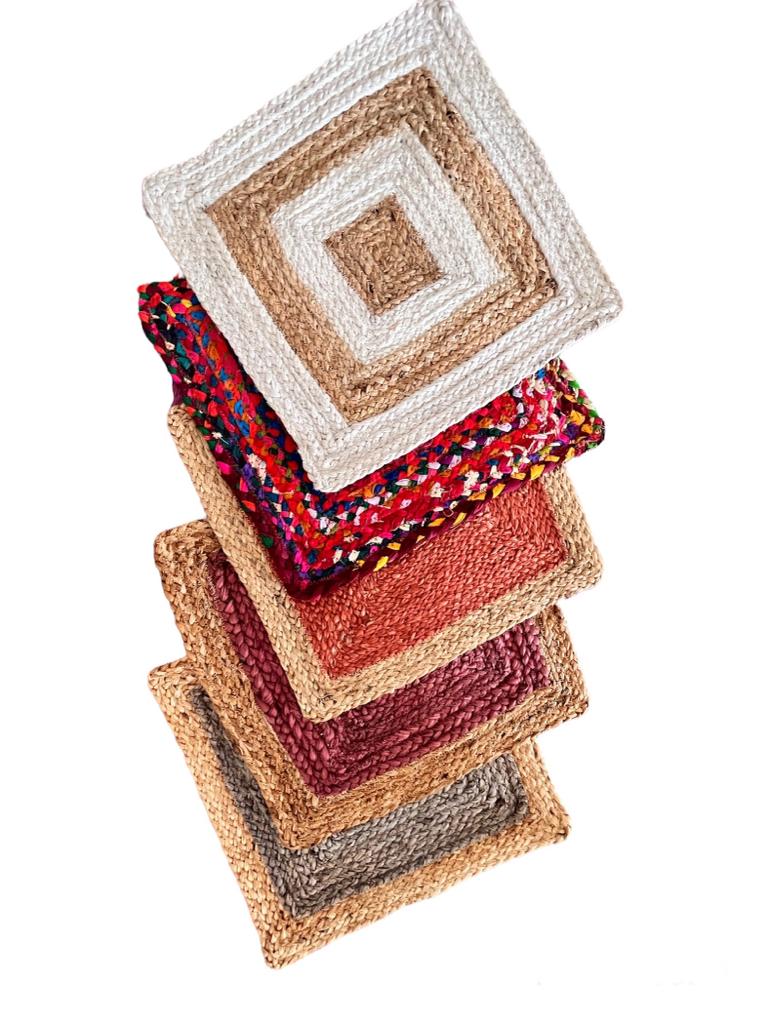
Placement should also match the construction. KalinMart's jute area rugs and runners collection includes round rugs, braided styles, and hallway runners for different spaces. A round denim-and-jute area rug can define a reading corner, foyer, or small seating group, while a beige-and-white jute runner can add a softer visual line to a hallway or bedroom.
If you are still deciding between natural jute and a softer wool rug, read KalinMart's guide to wool vs. jute rugs. For shape and proportion, the area rug collection can help you compare round and rectangular options.
How to store a jute rug
Clean and dry the rug completely before storage. Roll it rather than folding it to reduce creases. Wrap it in a breathable protective material instead of airtight plastic that could trap residual moisture.
Store the roll horizontally in a clean, dry, climate-controlled location, raised off a concrete floor. Avoid attics, garages, sheds, and damp basements where temperature and humidity can change quickly. Inspect a stored rug periodically for moisture, pests, or odor.
Quick jute rug care checklist
-
Vacuum gently with the beater bar turned off.
-
Clean the floor beneath the rug.
-
Rotate the rug every three to six months.
-
Blot spills immediately; never rub.
-
Test any cleaning method in a hidden area.
-
Use minimal moisture and dry both sides completely.
-
Avoid soaking, steam cleaning, and machine washing unless the care label allows them.
-
Use a rug pad suited to the flooring.
-
Keep the rug away from persistent dampness and uncontrolled humidity.
-
Call an experienced professional for major stains, odors, pet accidents, or mold concerns.
Frequently asked questions
Can I use baking soda on a jute rug?
Do not assume every home remedy is safe for every rug. Check the manufacturer's instructions first and test any permitted treatment in an inconspicuous area. Fine powder can also settle deep in an open weave, so complete removal may be difficult.
Can I wash a jute rug with water?
Most jute rugs should not be saturated. Use a low-moisture spot-cleaning method only when the care instructions permit it. If the entire rug needs cleaning, choose a professional who understands natural fibers.
How often should I vacuum a jute rug?
For an average household, gentle weekly vacuuming is a good starting point. Vacuum more often in a busy entry or hallway, but keep the brush roll off to protect the weave.
What should I do if my jute rug gets very wet?
Blot and extract as much moisture as possible, lift the rug off the floor, dry the rug, pad, and floor separately, and increase air movement. Address the water source immediately. Seek professional help if the rug remains damp, changes shape, develops stains, or smells musty.
Are jute rugs suitable for homes with pets?
They can be, especially in dry rooms, but the textured weave can hold hair and absorb accidents. Gentle, frequent vacuuming and immediate blotting are essential. A lower-maintenance material may be preferable if accidents are common.
Keep natural texture looking its best
The safest jute rug care routine is mostly preventive: vacuum gently, rotate the rug, respond to spills quickly, limit moisture, and dry every affected layer completely. Those simple habits protect the natural texture that makes jute so appealing.
Ready to bring that texture into your space? Explore KalinMart's handmade jute rugs and runners, including round braided rugs and hallway-friendly designs, and always follow the care directions listed for the specific piece you choose.