

Wool vs. Jute Rugs: Which Is Better for Your Home?
Choosing a rug isn't only about finding a color or pattern you like. The material matters just as much.
Two of the most popular natural rug materials are wool and jute. Both can be beautiful, durable, and long-lasting, but they feel very different underfoot and work better in different parts of the home.
So which one should you choose?
The short answer is: it depends on the room, the way you use it, and the look you want.
Wool is usually the better choice when you want softness, comfort, warmth, and a more refined look. Jute is a great choice when you want natural texture, a relaxed feel, and an earthy or rustic look.
Let's look at the differences in more detail. And if you'd rather browse by material first, our homepage breaks the whole catalog down by fiber — see Rugs Based on Fibres for Silk, Blended Wool, New Zealand Wool, and Jute/Cotton at a glance.
Wool vs. Jute at a Glance
| Wool Rugs | Jute Rugs | |
|---|---|---|
| Feel | Soft and comfortable | Natural and textured |
| Appearance | Rich, detailed, versatile | Organic, earthy, relaxed |
| Durability | Excellent | Good |
| Best for | Living rooms, bedrooms, formal spaces | Entryways, dining rooms, casual spaces |
| Texture | Soft to medium depending on construction | Coarse to textured |
| Design options | Very wide range | Often natural or woven patterns |
| Natural fiber | Yes | Yes |
| Best feature | Comfort and resilience | Texture and natural character |
Neither material is automatically "better."
The right question is: Which material is better for your room?
Why Choose a Wool Rug?
Wool has been used for rugs for centuries, and there is a reason it remains one of the most popular materials for handmade rugs.
Good-quality wool has a naturally soft feel while also being remarkably resilient.
A hand-knotted wool rug can also have considerable visual depth because the pile, knots, colors, and patterns work together to create a surface that changes slightly as light moves across it. Wondering whether a rug labeled "hand-knotted" actually is one? See 5 signs you're buying an authentic hand-knotted rug, or read about the difference between hand-knotted and hand-tufted construction.

Wool is a good choice if you want:
- A softer rug underfoot
- A warmer and more comfortable feel
- A traditional or luxurious appearance
- Detailed patterns and colors
- A rug for a living room or bedroom
- A rug that can become a long-term part of your home
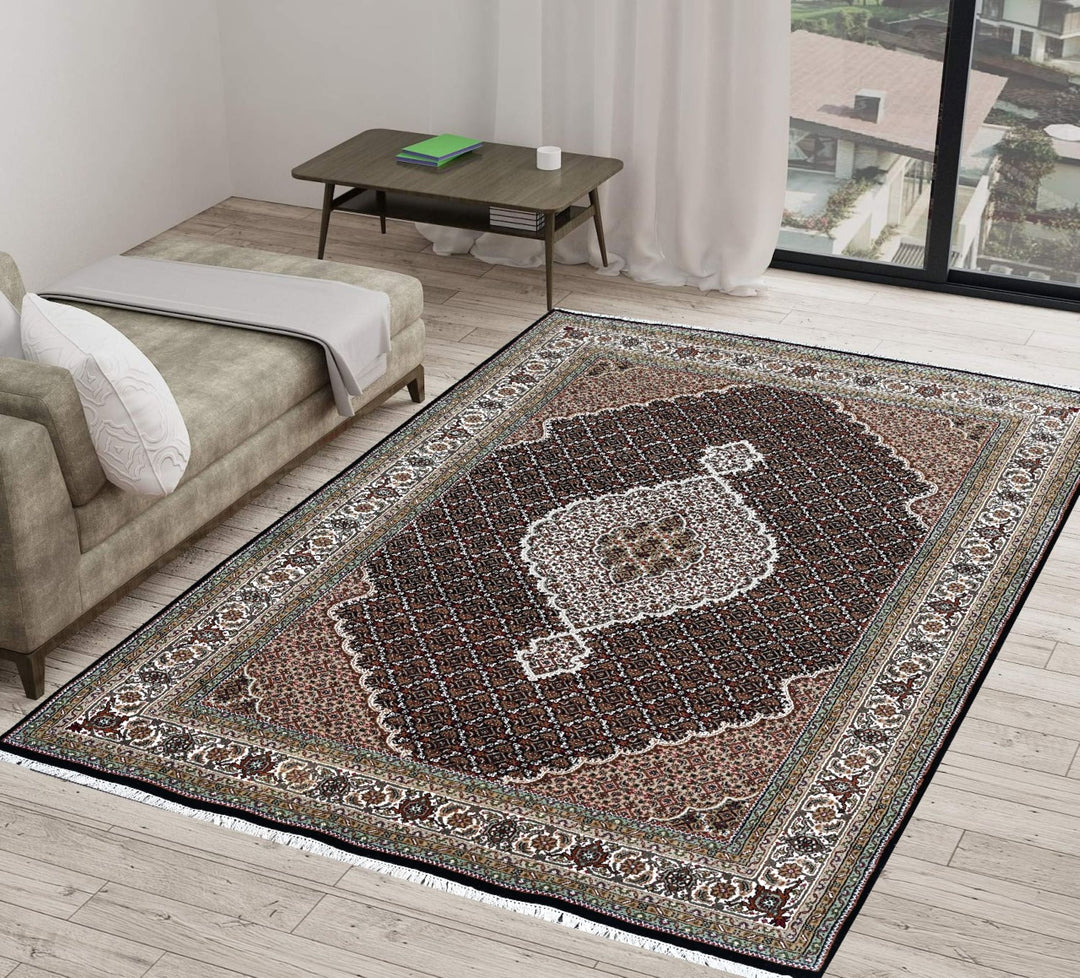
KalinMart's wool collection includes hand-knotted Persian-style designs as well as modern wool rugs and runners.
Wool works especially well in living rooms
The living room is often where people spend the most time, so comfort matters.
A soft wool rug can make a seating area feel warmer and more inviting, particularly when the rug is large enough to connect the sofa, chairs, and coffee table.
For a room where you want the rug to be an important design element rather than simply a floor covering, wool gives you a lot of flexibility.
Why Choose a Jute Rug?
Jute has a completely different personality.
Rather than trying to look luxurious and soft, jute celebrates its natural texture.
The visible fibers and woven construction give jute rugs an earthy, relaxed character that works especially well with natural, farmhouse, rustic, coastal, and boho interiors.

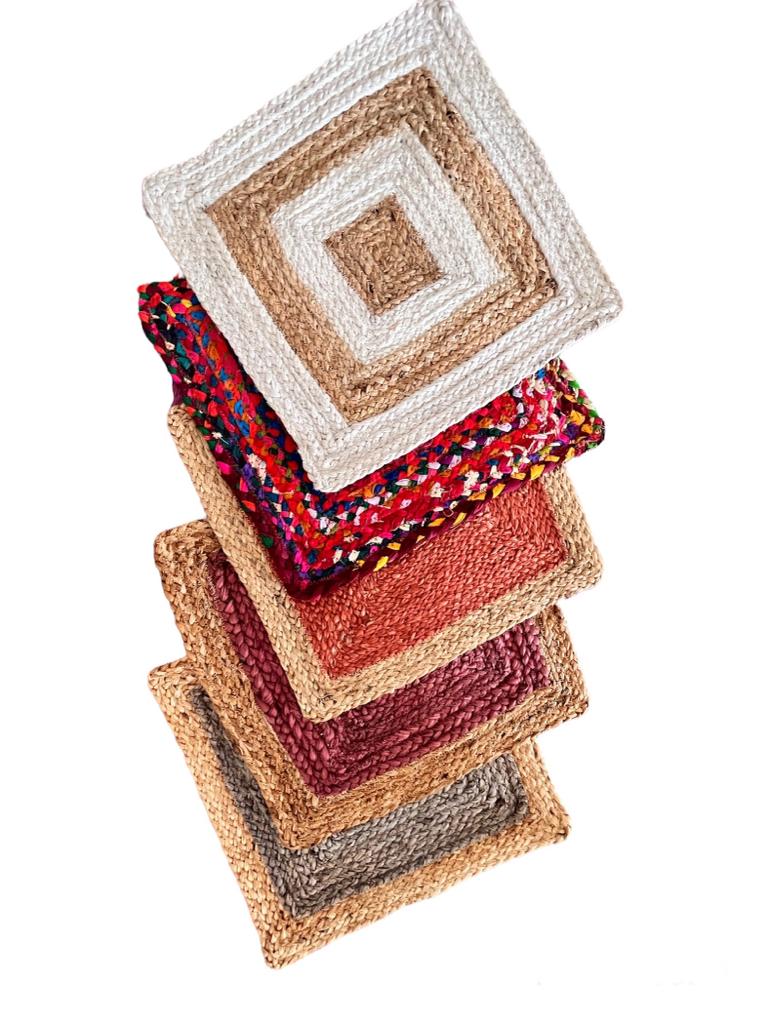
KalinMart's jute collection includes hand-braided rugs and runners made from natural fibers, with options for living rooms, bedrooms, dining areas, and entryways.
Jute is a good choice if you want:
- Natural texture
- An earthy or casual appearance
- A relaxed decorating style
- A relatively simple neutral foundation
- A rug for an entryway or dining area
- A handwoven or braided look
Jute can also work beautifully as a foundation for a room where you don't want the rug to compete with artwork, furniture, or other patterns.
Wool vs. Jute: Which Feels Better?
This is one of the biggest differences.
Wool feels soft.
Jute feels textured.
If you regularly walk barefoot across your rug, sit on the floor, or have a living room where comfort is important, wool will usually be the more comfortable choice.
Jute has a more pronounced natural texture. Some people love that texture because it gives the room character. Others prefer the softer feel of wool.
There isn't a right answer. It's really about what you want the room to feel like.
Which Is More Durable: Wool or Jute?
Both can last for years when properly cared for, but they handle everyday use differently.
Wool is naturally resilient. The fibers can bend and recover, which is one reason wool has traditionally been used for rugs in busy homes.
Jute is also a durable natural fiber, but its texture and construction make it particularly attractive for casual spaces where you want a natural, hardworking floor covering.
For a busy family living room where comfort and resilience are priorities, I'd lean toward wool.
For a casual entryway, dining space, or room where natural texture is the priority, jute can be an excellent choice.
Which Is Better for a High-Traffic Area?
This depends on the type of traffic.
Living room
Wool is often the better choice when the room gets heavy everyday use and you want comfort as well as durability.
Entryway
Jute can be a good choice when you want a natural, textured look and the rug is appropriate for the conditions of the space.
Bedroom
Wool gets the advantage if softness is important.
Dining room
Either can work. Jute can look particularly attractive beneath a dining table because its natural texture complements wood furniture and other natural materials. Wool is the better choice if you want a more refined or patterned look.
What About Shedding?
This is an important consideration when buying wool.
Some new wool rugs can shed loose fibers, particularly during the first period of use. This is not necessarily a sign that the rug is defective.
Regular, gentle vacuuming can help remove loose fibers over time.
Jute behaves differently because you're dealing with a much more textured plant fiber.
If you don't want to deal with the initial shedding that can accompany some wool rugs, jute may appeal to you more.
Which Material Is Better for a Dining Room?
This one comes down largely to style.
Choose jute if:
You want a relaxed, natural dining room with wood, linen, rattan, or other organic materials.

Choose wool if:
You want the rug to add color, pattern, softness, or a more traditional feel beneath the dining table.
And don't forget the most important part: the rug needs to be large enough for the chairs to remain on the rug when they are pulled away from the table. A beautiful rug that is too small will still look wrong — our rug sizing guide covers exactly how much extra room to leave, room by room.
Which Material Is Better for a Bedroom?
For most bedrooms, I'd lean toward wool.
The reason is simple: bedrooms are places where comfort matters.
A soft wool rug beside or underneath the bed can make the room feel warmer and more comfortable, particularly first thing in the morning.
Jute can still work beautifully if your bedroom has a natural, rustic, farmhouse, or bohemian style and you specifically want more texture.
Which Material Is Better for an Entryway?
Here the answer is less straightforward.
Entryways need a rug that fits the space, looks good, and can handle regular foot traffic.
A natural jute runner or rug can work particularly well when you want an earthy, welcoming first impression.
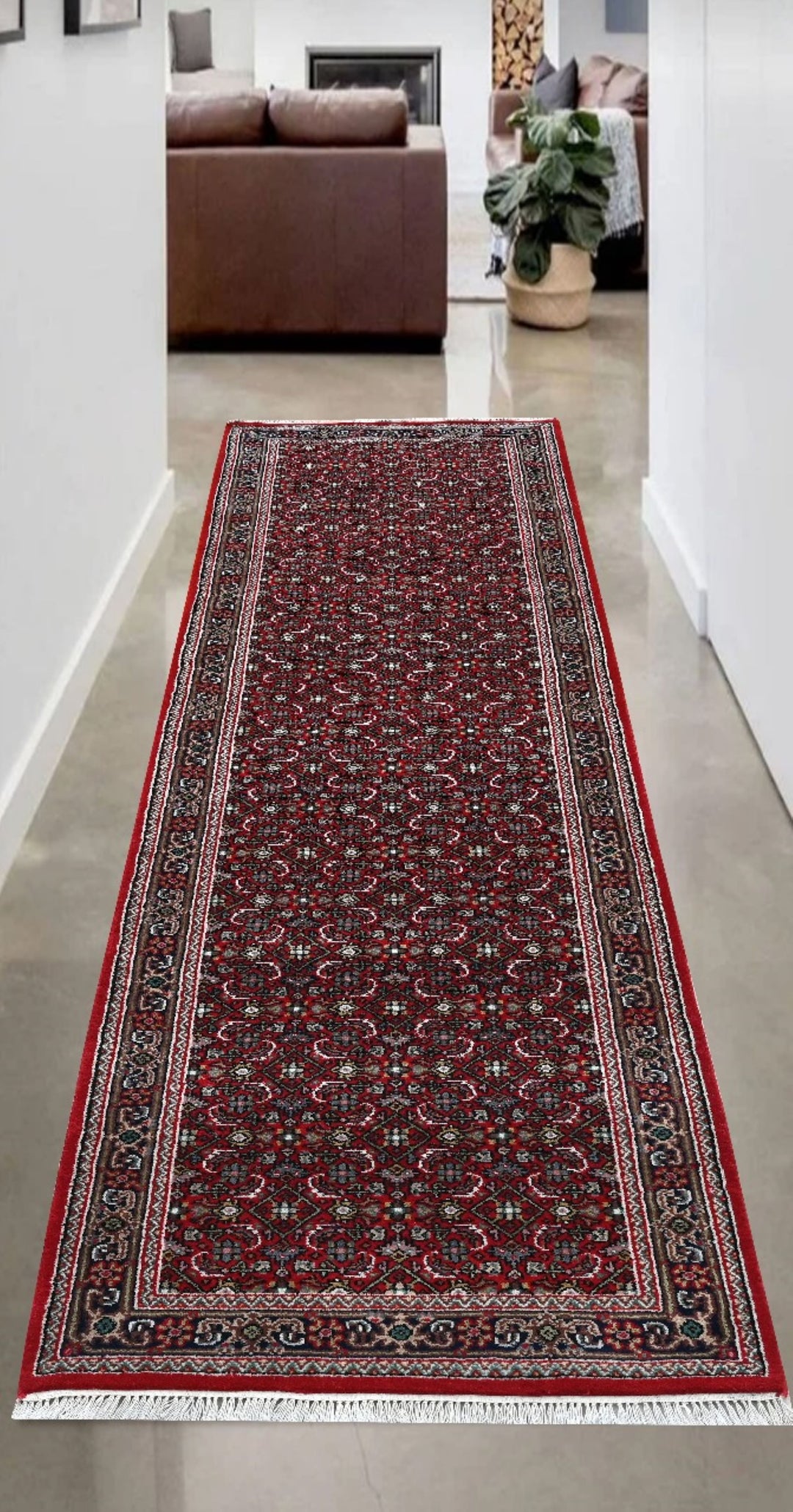
KalinMart offers jute and jute-blend runners in several lengths, as well as hand-knotted wool runners.
If the entryway is part of a more formal interior, a patterned wool runner may be the better visual choice.
Wool or Jute for a Home With Pets?
There isn't one universal answer.
Think about how your pets actually use the room.
If your dog or cat spends a lot of time lying on the rug, wool's softer surface may be preferable.
If you're looking for a more casual natural-fiber rug in a lower-cost area of the home, jute can be attractive.
In either case, consider the rug's construction, pile height, color, and maintenance requirements rather than choosing solely based on the fiber.
What About the Look?
This may ultimately be the deciding factor.
Wool
Wool gives you more visual possibilities. It can be traditional, Persian-inspired, geometric, floral, modern, minimal, colorful, or neutral.
A hand-knotted wool rug can also become a focal point in a room.
Jute
Jute tends to be more understated. Its appeal comes from natural color, visible fiber, braided or woven texture, organic character, and neutral tones.
If your furniture and artwork already make a strong statement, a jute rug can provide texture without adding another competing pattern.
Which Is More Eco-Friendly?
Both wool and jute are natural fibers, but "natural" doesn't automatically mean that every rug made from that fiber has the same environmental footprint.
Construction, processing, dyes, transportation, backing materials, and how long the rug lasts all matter.
A long-lasting rug that stays in use for many years can be a better choice than a rug that needs to be replaced frequently.
That's one reason we think it's worth looking beyond the material name and asking: How is the rug made? Who made it? How long is it designed to last? Can it be repaired or cared for over time?
Those questions matter just as much as whether the label says wool or jute.
So, Which Should You Buy?
Here's the simple version.
Choose wool if you want:
Softness + comfort + detailed design + resilience
Wool is particularly well suited to living rooms, bedrooms, and spaces where the rug is meant to be a major part of the interior.
Choose jute if you want:
Natural texture + relaxed style + earthy character
Jute is particularly attractive for casual living spaces, dining rooms, entryways, and interiors built around natural materials.
There's No Need to Choose Based on One Room
You don't have to use the same material throughout your home. In fact, mixing materials can make a home more interesting.
For example:
- Living room → hand-knotted wool rug
- Dining room → natural jute rug
- Hallway → jute or wool runner
- Bedroom → soft wool rug
This creates variety while keeping the overall home connected.
Explore Handmade Wool & Jute Rugs at KalinMart
At KalinMart, we work with both wool and natural-fiber rugs because they serve different purposes.
Our wool collection includes hand-knotted and hand-tufted rugs in traditional Persian-inspired designs as well as contemporary styles.
Our jute collection includes hand-braided and handwoven rugs and runners designed for spaces where natural texture is part of the appeal.
Shop Jute Area Rugs & Runners →
And if you're looking for something narrower for a hallway, bedroom, or entryway, explore our handmade runner collection as well. KalinMart currently carries both hand-knotted wool runners and jute/cotton runners in several sizes. For the full picture of how we organize the catalog — by fiber, weaving method, and design — visit the Rugs Based on Fibres section on our homepage.
Final Thought
There isn't a winner in the wool-versus-jute debate.
Wool is about comfort, resilience, and design.
Jute is about texture, simplicity, and natural character.
The best rug is the one that fits the way you live and the way you want your room to feel.
Choose the material first. Then choose the size, color, pattern, and construction that fit your space. That's how you end up with a rug you'll still enjoy years from now.